Mechanical Team - Hopkinauts MRT
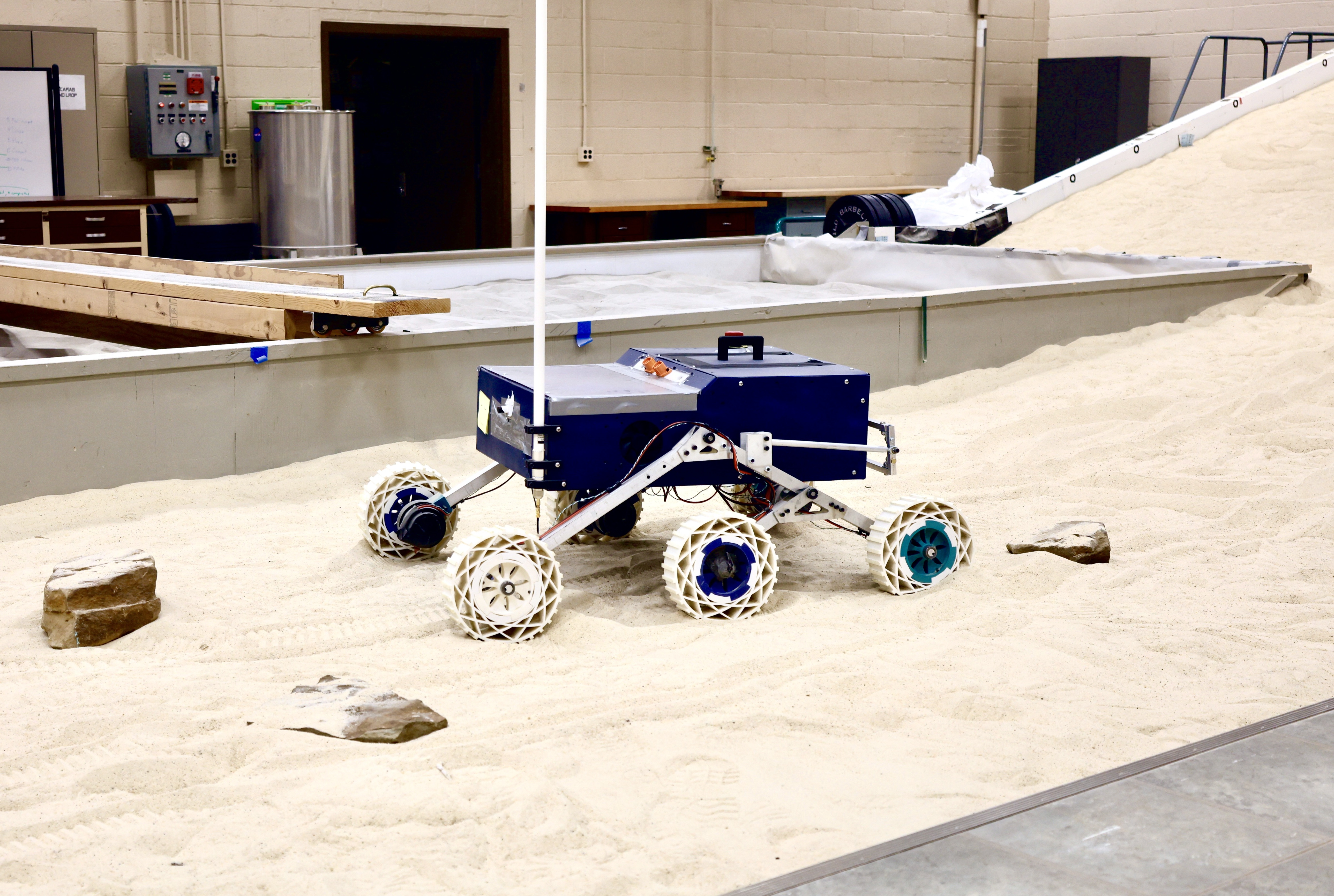
Traction testing at NASA Glenn Research Center
The Hopkinauts Mars Rover Team works to build a medium-sized autonomous rover to compete in the University Rover Challenge (URC), an international engineering competition with over 100 participants annually.
I'm the team's external vice president, helping to manage corporate and alumni connections while also leading the development of the Rover's mechanical arm. Previously, I served as the Mechanical subteam lead, managing a team of more than 20 students in designing and building the rover’s frame, robotic arm, and life-detection science system.
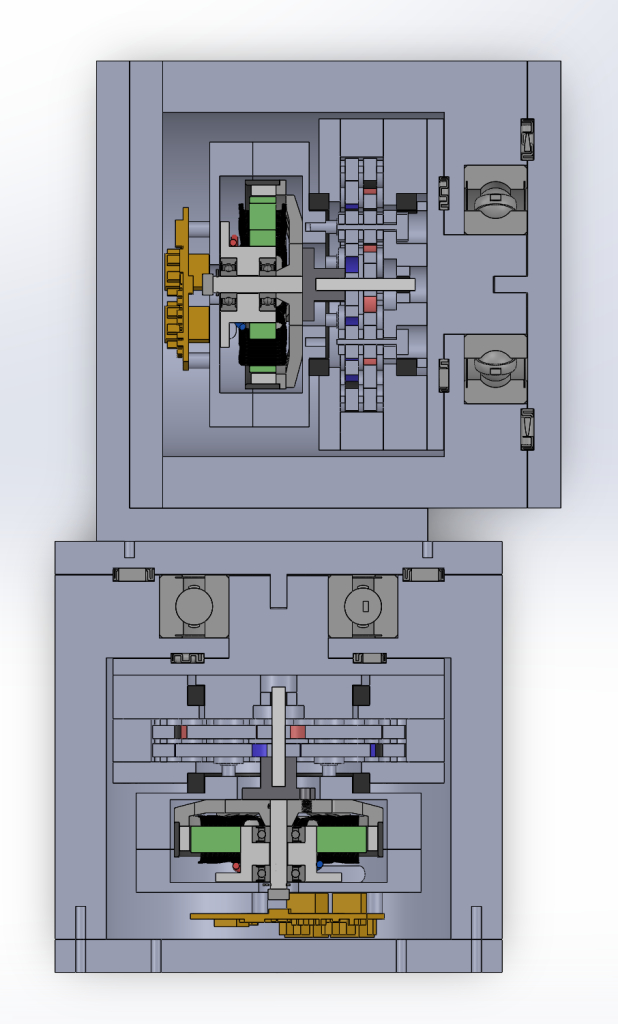
I'm currently developing a 6-Degree-Of-Freedom carbon fiber robotic arm equipped with custom cycloidal gearboxes and a precision end effector. Each of the six joints uses brushless DC motors controlled by a Raspberry Pi, giving the arm high torque density and precise motion control. The gearboxes are in initial prototyping and testing phase, and we expect to have a fully working prototype by the end of 2026.
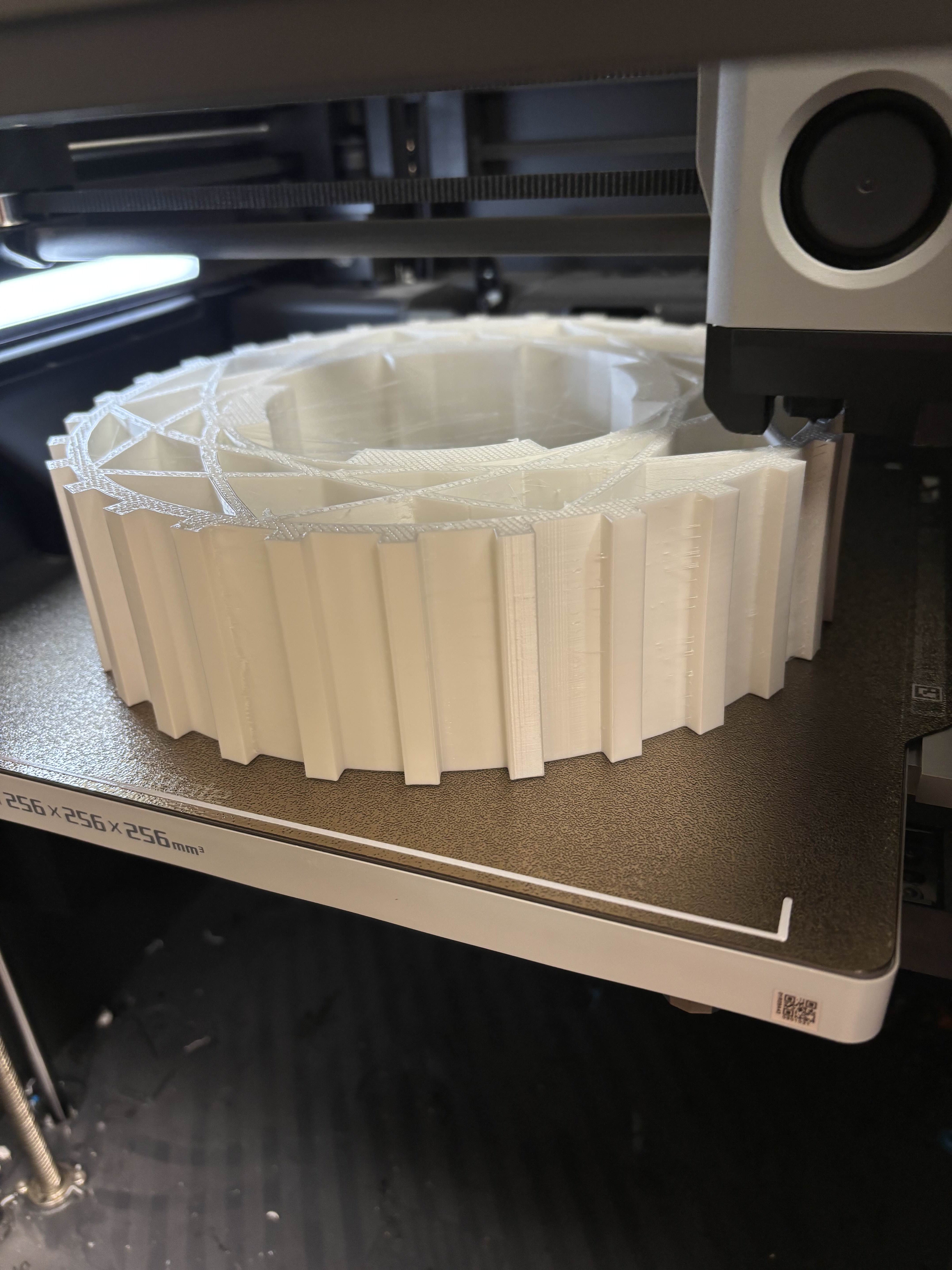
As mechanical lead, I manufactured the team's first welded steel frame, optimizing for rigidity and dust resistance while minimizing weight. The frame is equipped with a 6-wheel rocker-bogie suspension system based on real NASA rover designs, ensuring effective obstacle traversal. Each wheel uses a 3D-printed TPU tire. These tires were analyzed using SolidWorks FEA in order to ensure optimal deformation under load in order to increase traction.
Our Life Detection system uses a drilling mechanism to collect soil samples that were transferred into cuvettes for onsite chemical testing and spectroscopy. I designed the soil transportation system using multiple linear actuators and a custom peristaltic pump. These mechanisms enabled our team to effectively analyze soil samples, achieving an 80 percent life-detection accuracy.
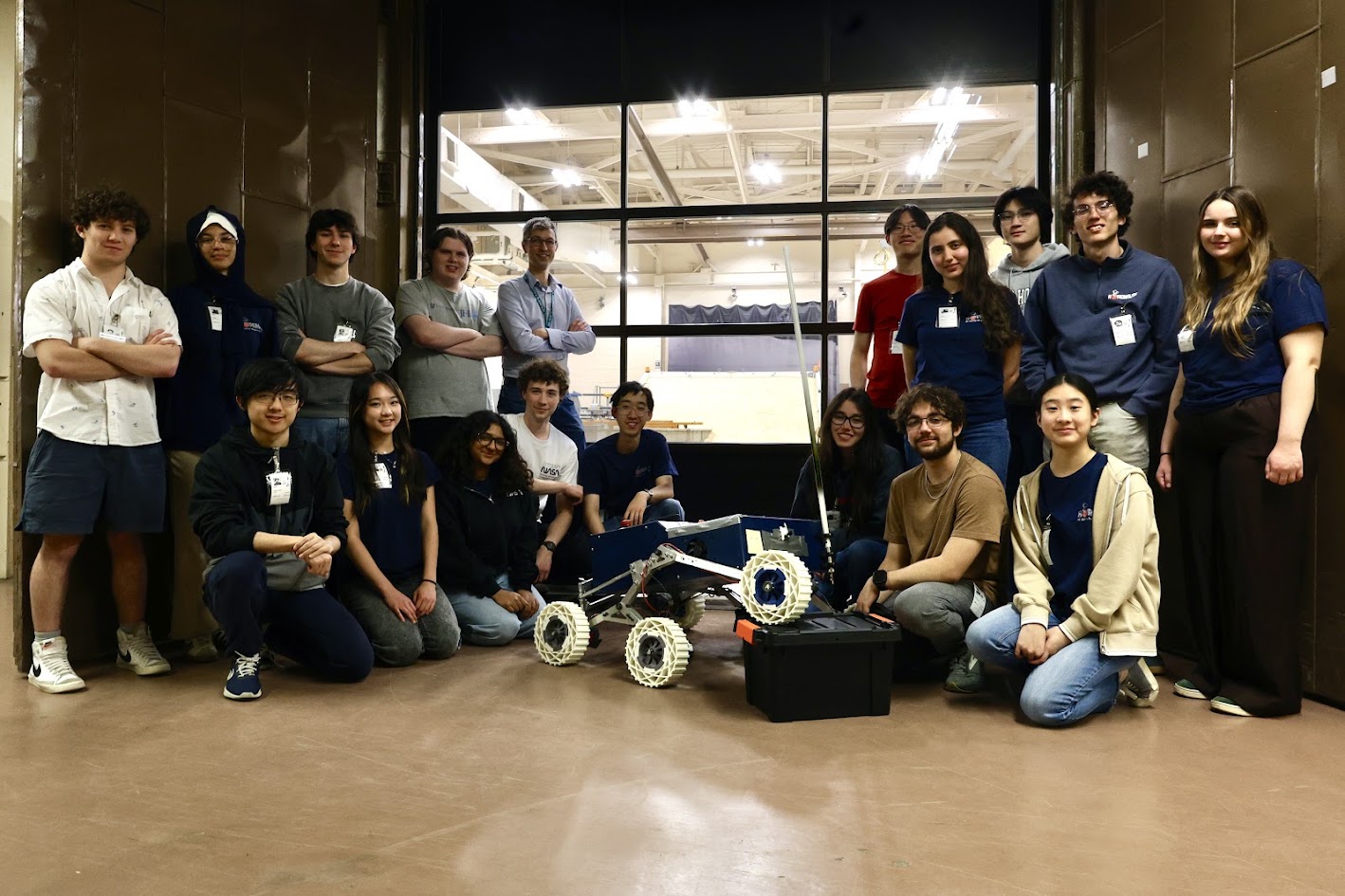
In May 2026, we got the opportunity to test our rover in the SLOPE Lab at the NASA Glenn Research Center in Cleveland, OH. The SLOPE Lab is used to analyze Roving vehicles for traction and dust resistance on simulated lunar and Martian surfaces. The experience allowed us to analyze real-world performance while gaining valuable feedback from NASA engineers.
Check out the Hopkinauts website! https://jhurover.org/
Gallery